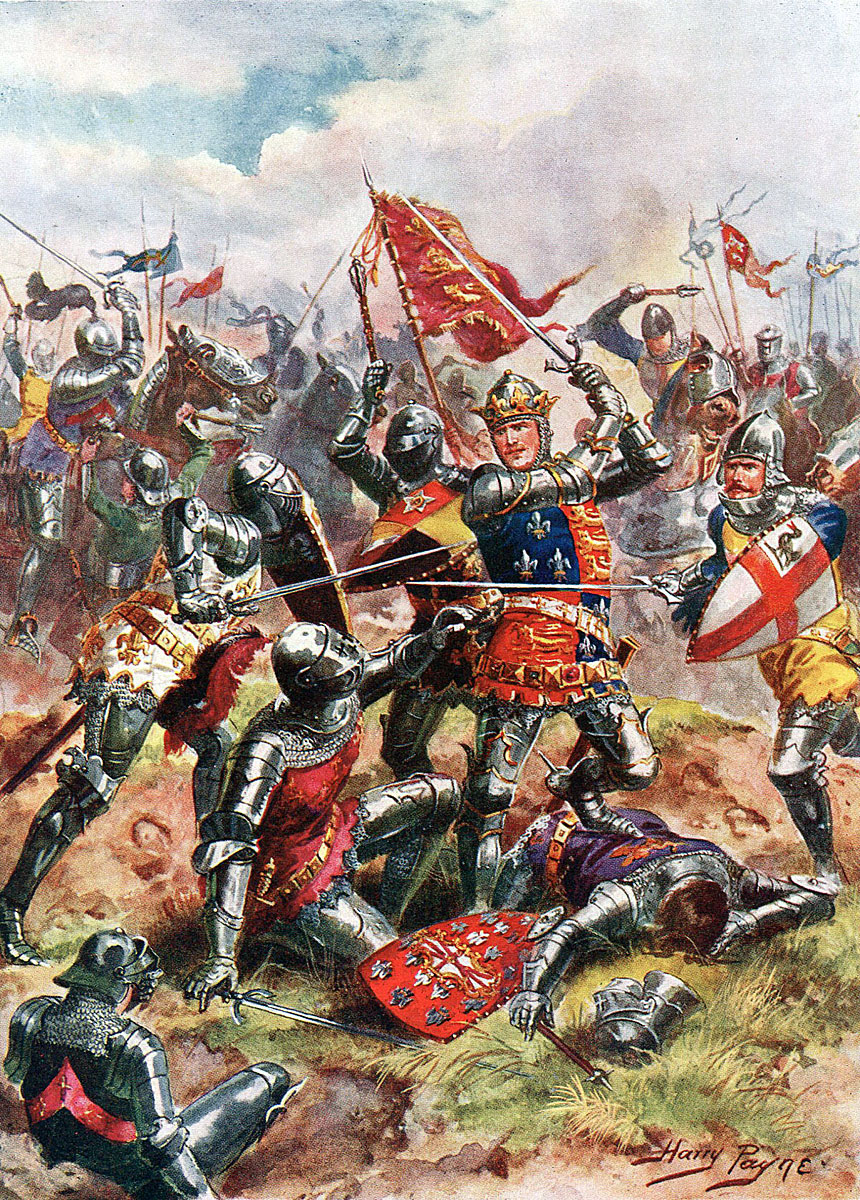
On October 25, 1415, the feast day of Saints Crispin and Crispinian, an exhausted English army ravaged by dysentery faced an overwhelmingly superior French coalition in the muddy fields between Azincourt and Tramecourt. Henry V of England refused all retreat despite the odds, positioned his Welsh archers on the flanks, and waited. The French knights, weighed down by their armor and bogged down in the mud, struggled to cross the field.
When they finally came within range, the English archers unleashed a devastating storm of arrows that broke the French columns before contact could be made. The first line collapsed under the hail of shafts, the second stumbled over the dead and dying. The French defeat was total.
Agincourt marked the zenith of the longbowman's dominance over heavy cavalry. It inspired Shakespeare and entered English legend as a symbol of victory against all odds.